
How Ecowiser assesses sustainability evidence
A documented methodology under governance review.
The Wiser methodology connects a specified sustainability claim to identifiable evidence, scope, dates, limitations and a review trigger. It is not statutory certification, legal advice, regulatory approval or proof that a brand is sustainable overall.
Scope, evidence, claim test and status.
The methodology separates externally controlled evidence, primary operational records, company disclosures and contextual sources, then asks whether those sources support the exact wording and boundary proposed.
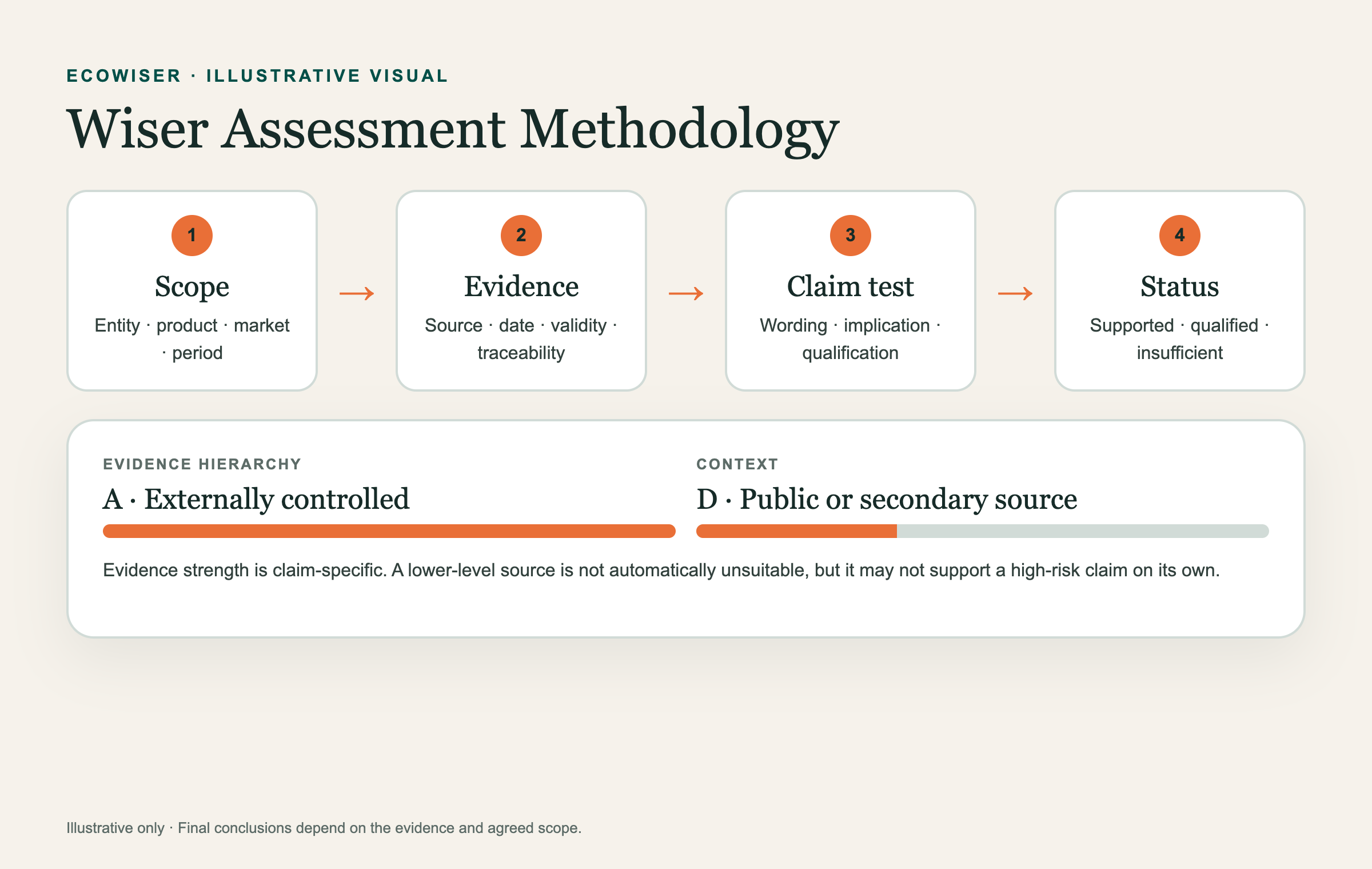
Methodology v1.0 draft · Governance review · No effective date set.
Evidence requirements.
Externally controlled
Controlled primary
Disclosures and context
Ten-step review process.
- Define entity, product, claim, market and evidence period.
- Record commercial and other conflicts.
- Capture express and implied claims.
- Connect each claim to its source, date, method and limits.
- Review authenticity, relevance and traceability.
- Check completeness, consistency and contradictions.
- Test wording, qualification and whole-impression risk.
- Assign a claim-specific status.
- Quality-review material decisions where practical.
- Issue a dated record and set reassessment triggers.
Claim statuses and next action.
For the stated scope
Keep the limitation visible
Strengthen or stop
Other statuses include Evidence received, Partially supported, Contradicted, Out of scope, Review due and Withdrawn.
Materials and packaging answer different questions.
Product or range composition
Primary, secondary or transport packaging
Governance, validity and corrections.
- Payment does not guarantee a supported result.
- Communication or promotion cannot improve an evidence status.
- Commercial, affiliate and sponsored relationships are disclosed.
- Evidence expiry, product or supplier change, legal change or a credible complaint can trigger reassessment.
- Appeals identify the disputed conclusion and supporting evidence; another reviewer is used where practical.
Current status: methodology v1.0 draft under governance review. No effective date has been set.
Start with one claim and its evidence.
A narrow, traceable conclusion is more useful than a broad sustainability promise.